Core Carbon Principles at the heart of market transformation: report
Written by ICVCM
Published
5 min read
Project developers, programs, buyers and policymakers are adopting high-integrity carbon credits to accelerate climate action and boost sustainable development, analysis finds
Carbon credits generated by projects using high integrity methodologies that meet the strict criteria of the Core Carbon Principles are raising global quality standards, increasing market confidence, and delivering real benefits for communities and nature, according to a new report.
The report by the Integrity Council for the Voluntary Carbon Market — an independent global governance body — details significant positive impacts linked to the Core Carbon Principles, a science-based quality threshold designed to ensure that carbon credit projects deliver genuine climate action while supporting the rights and sustainable development of communities. It also documents a number of case studies of carbon projects using CCP-Approved methodologies.
Market impact
Demand has surged for Core Carbon Principles-labelled credits, which now command a price premium averaging up to 25% compared to other credits, according to market analysts1. With seven programs and 35 methodologies for generating carbon credits now approved as meeting the Core Carbon Principles’ requirements, “the market is being transformed”, said the Chair of the Integrity Council’s Governing Board, Annette L. Nazareth.
She added: “Today, buyers, regulators, and policymakers worldwide increasingly see the Core Carbon Principles as the reference point for credibility. Governments are embedding them into national frameworks, and carbon-crediting programs are raising their game to meet this threshold.”
Global progress
Momentum for high-integrity carbon markets is growing worldwide, with the report highlighting several national and regional examples, including:
- Africa — where countries have issued over 40 million carbon credits — 17.5% of the global total. There are currently 45 projects already meeting the Core Carbon Principles standards and more in the pipeline. According to analysts, high-integrity African carbon markets could mobilise up to $6 billion in climate finance annually by 2030 and support up to 30 million jobs2.
- Southeast Asia — where at least 22 projects have adopted Core Carbon Principles-Approved methodologies. The report highlights Singapore’s leadership and Southeast Asia’s potential as a major supplier of high-integrity carbon credits. By the 2050, the region’s market could reach an estimated US$3 trillion, creating 13.7 million jobs and reducing 1.1 billion metric tonnes of carbon emissions annually. In November 2025, Indonesia’s Ministry of Forestry signed a memorandum of understanding with the Integrity Council to strengthen the development of its high-integrity carbon market.
- Europe — where the UK is engaging with the Core Carbon Principles standards through policy consultations and market development. France has launched a Carbon Credit Charter supported by 17 companies, which invites organisations to commit to using carbon credits aligned with the Core Carbon Principles3.
- North America — where US-based buyers account for the greatest global demand for carbon credits. The US also is a supplier of carbon credits, currently issuing approximately 20% of all global supply. Some 84 US projects are already using Core Carbon Principles-Approved methodologies.
- South America — where Brazil is recognised for innovative approaches to forestry, with projects being developed under methodologies that meet the Core Carbon Principles criteria already attracting international investment. The region has issued nearly a quarter of global supply of carbon credits. As the volume of Core Carbon Principles-labelled credits grows, this could bring a range of social benefits while accelerating progress towards the region’s climate goals.
Changing lives
Beyond market metrics, the Core Carbon Principles Impact Report 2025 highlights project case studies generating high-integrity credits under CCP-Approved methodologies that are changing lives and landscapes across the world.
“The activities we carry out in the forest have brought in money that has been used to buy animals, food, pay school fees, pay for health care and other family expenses,” said Mahamdi Nikiema, a farmer involved in the Tond Tenga agroforestry project in Burkina Faso.
Similarly, a project involving refugees and local communities in Bangladesh shows the broader social and environmental benefits — in this case, by distributing healthier, more fuel-efficient cookstoves to families.
“With the new stoves, our families breathe cleaner air and spend less on fuel. It’s made a real difference in our daily lives,” said a community member.
With the publication of the Core Carbon Principles Impact Report 2025, the Integrity Council reaffirms its commitment to ensuring that the Core Carbon Principles deliver impact today and continue to evolve into the future in response to new evidence, feedback from market participants and communities, and the world’s changing climate needs.
Ends
Note to Editors
The Integrity Council is an independent governance body that sets and maintains the Core Carbon Principles, ensuring that carbon credits deliver real, verifiable climate impact and support sustainable development while respecting the rights and agency of Indigenous Peoples as well as local communities.
The Core Carbon Principles Impact Report 2025 can be read and downloaded here: https://icvcm.org/ccp-impact-report-2025/
Media Contact: ICVCM@greenhouse.agency
1 Calyx Global, The Calyx Carbon Integrity Index, February 2025.
2 African Carbon Markets Initiative, Africa Carbon Markets Roadmap Report, November 2022.
3 See French government press release, ChangeNOW 2025 – Launch of the Carbon Credit Charter, April 2025.
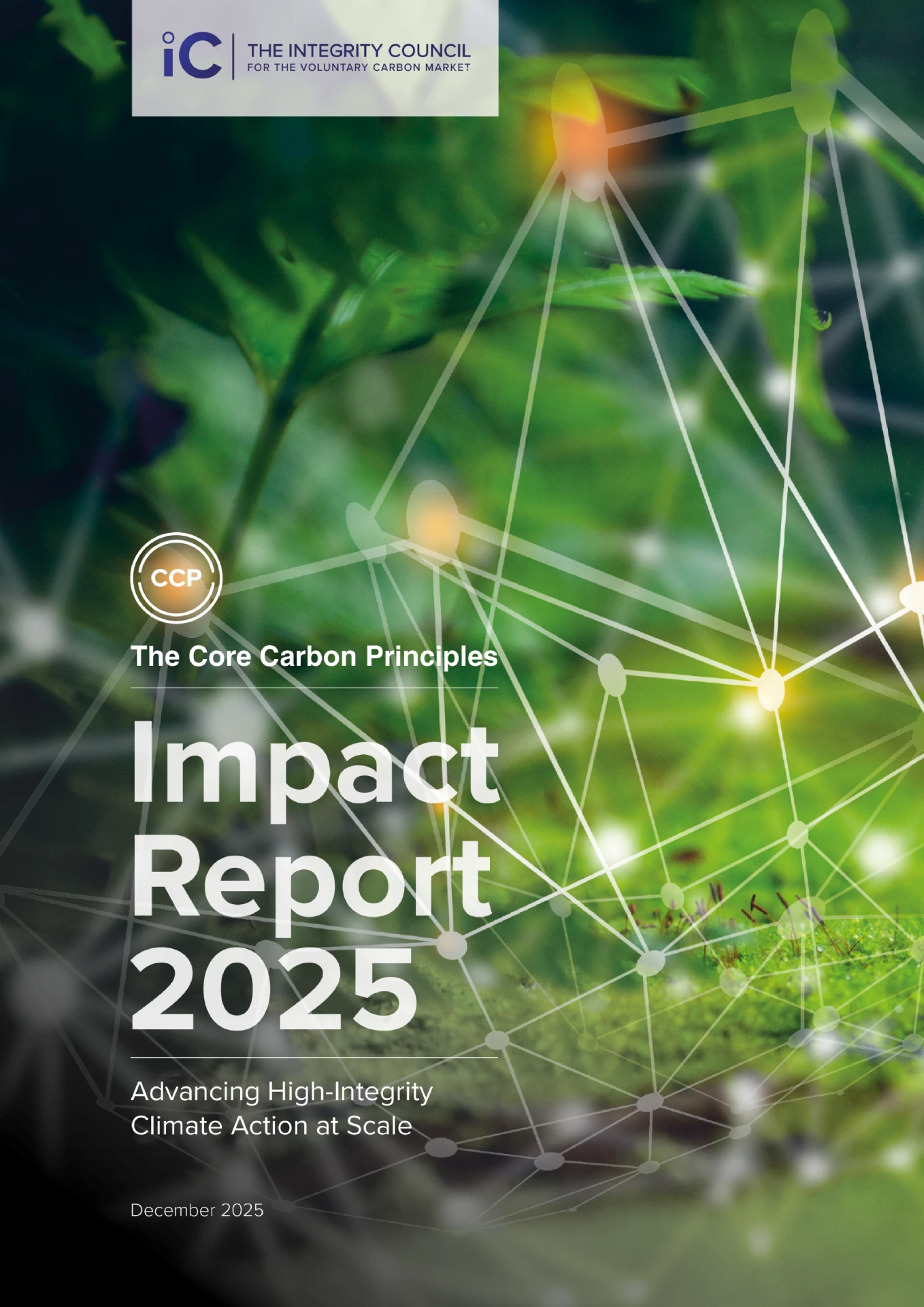
The Core Carbon Principles Impact Report 2025
Advancing High-Integrity Climate Action at Scale.