
Integrity Council announces assessment decisions on Reforestation, Improved Forest Management (IFM) and rice cultivation methodologies
Written by ICVCM
Published
5 min read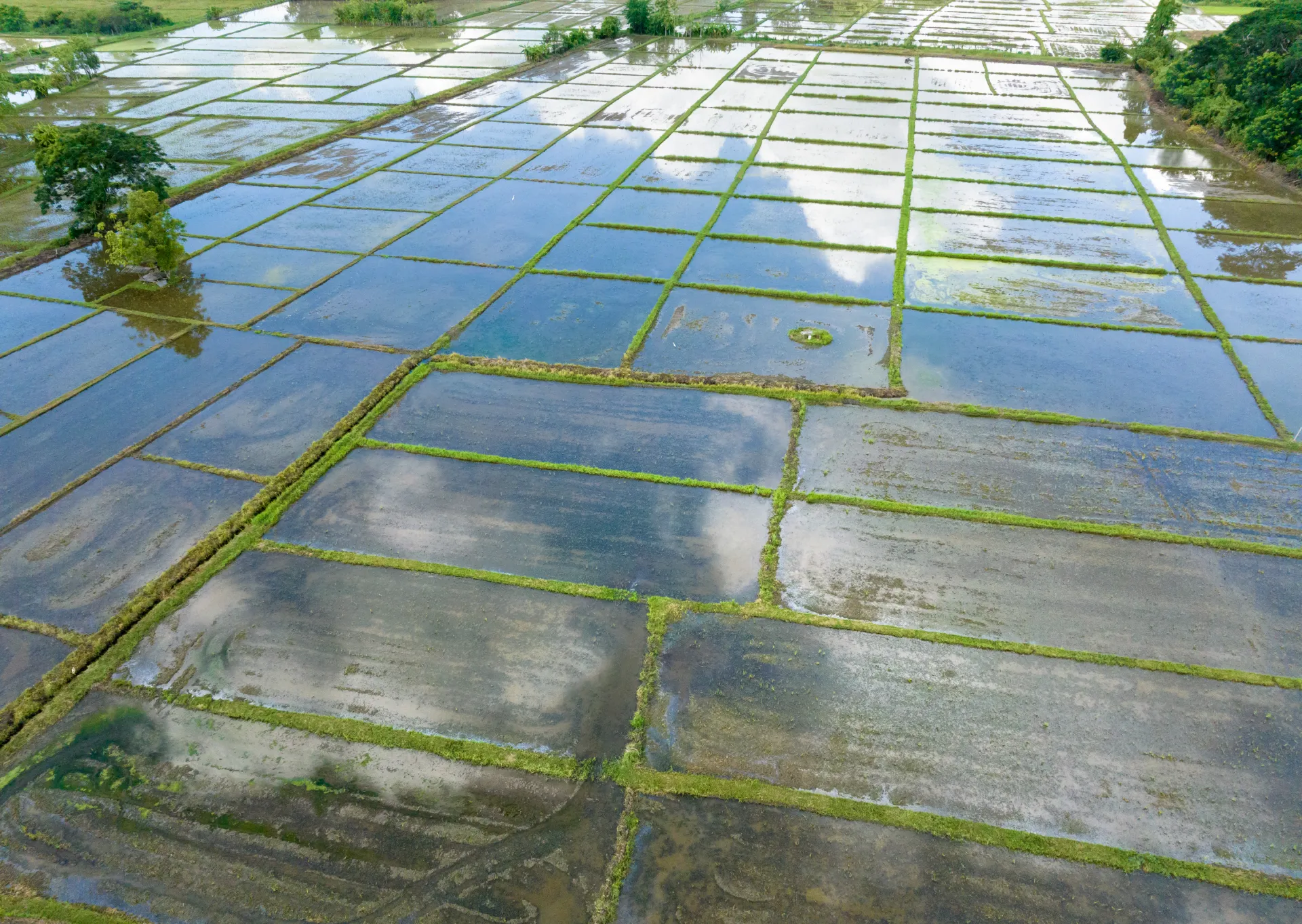
The Integrity Council for the Voluntary Carbon Market has announced its latest batch of assessment decisions, as follows:
- Isometric: ISM Reforestation Protocol v1.1 – CCP Approved
- Gold Standard: Methodology for methane emission reduction by adjusted water management practice in rice cultivation v1.0 – CCP Approved (Conditional)
- ACR: IFM on Non-Federal US Forestlands v2.0 – CCP Approved (Conditional)
ISM Reforestation Protocol v1.1
ISM Reforestation Protocol v1.1, published by Isometric in October 2025, is a new methodology that outlines the requirements and procedures for calculating carbon removals achieved through reforestation. Reforestation is a practice within the Afforestation, Reforestation, and Revegetation (ARR) category and refers to activities that lead to an increase in forest cover on land that was previously covered by forest. No credits have yet been issued, but 20 project developers are registered under the methodology. Isometric expect to issue over 4 million credits annually by 2030.
The assessment found that the methodology met all relevant criteria and requirements in the CCP Assessment Framework. As such it has been approved with no accompanying conditions, so all credits issued under the methodology will be eligible for CCP labels.
Gold Standard: Methodology for methane emission reduction by adjusted water management practice in rice cultivation v1.0
This methodology, published in July 2023, is the first Rice Cultivation Methane Avoidance methodology to be approved by the Integrity Council. A 2025 study estimates that rice paddies account for roughly 7% of global methane emissions, underscoring the importance of accelerating methane‑reduction strategies in agricultural systems – in which carbon projects can play an important role. This is of particular importance in Asia, where most of these emissions are generated.
The assessment found that this methodology version meets the relevant criteria and requirements for CCP-approval, where the following conditions are met:
- In cases where the activity applies the (c) Option 3 – Activity Penetration (AGR Project Specific) approach to demonstrate additionality; AND
- In cases where the activity applies the Rule Update – Accounting of Soil Organic Carbon Loss Risk in Activities Applying Methodology “Methane Emission Reduction by Adjusted Water Management Practice in Rice Cultivation”
Approximately 50,000 credits have been issued under this methodology, though it is the Integrity Council’s understanding that none of these credits comply with the first condition. They will not, therefore, be eligible for CCP labels. Gold Standard expect to issue up to 3.2 million credits over the next five years, based on current pipeline projections. The projects issuing these credits are primarily located in India, with additional activities in Pakistan, Vietnam, Bangladesh, Cambodia, Ghana, Indonesia, Lao PDR, Nepal, and Thailand. These credits will be eligible for CCP labels provided the approval conditions are met.
ACR: IFM on Non-Federal US Forestlands v2.0
IFM on Non-Federal US Forestlands v2.0 is an earlier version of a methodology approved by the Integrity Council’s Governing Board in August 2025. Version 2.1 was approved subject to the condition that:
- An appropriate leakage deduction is applied for projects that decrease total wood products produced by less than the 5% de minimis threshold, to ensure consistency with the approach already applied for all projects above this de minimis threshold;
Version 2.0 is now approved, subject to two additional conditions:
- A dynamic evaluation of the baseline has been verified in line with the ACR Improved Forest Management Methodologies Tool for Dynamic Evaluation of Baselines, developed in conjunction with version 2.1 of the methodology;
AND/OR
- Removal credits are generated per Equation 30 of the methodology
2.7 million credits are expected to be immediately eligible for the CCP label from a total of 13.3 million issued credits. Past and future removal credits issued using this methodology are eligible for CCP labels. Future emission reduction credits will be eligible for the CCP label if they apply the ACR Improved Forest Management Methodologies Tool for Dynamic Evaluation of Baselines.
NOTES TO EDITORS
For more information and to arrange interviews please contact:
Conor Quinn conor.quinn@greenhouse.agency
Greenhouse Communications icvcm@greenhouse.agency
ICVCM assessments and approvals to date
Since taking its first Decisions on Programs in March 2024, ICVCM has approved eight Carbon Crediting Programs as CCP Eligible: ACR, ART TREES, CAR, Equitable Earth, Gold Standard, Isometric, Puro.Earth and Verra.
Since taking its first Decisions on Categories in May 2024, the ICVCM Governing Board has approved 38 carbon crediting methodologies as meeting the requirements of the Assessment Framework and found that 22 methodologies did not. The majority of ICVCM CCP-Approved Decisions were on new versions of methodologies (and thus with very low issued volume), which reflects the fact that meeting the Assessment Framework is a high bar. See Assessment Status.
As a result of the assessment decisions to date, an estimated 105 million credits have been approved to use the CCP label. An estimated 52 million of these appear available in the market; 53 million have been retired or cancelled. Source: MSCI, accessed 27th January 2026.
About the Integrity Council
The Integrity Council for the Voluntary Carbon Market (Integrity Council) is an independent, non-profit governance body for the voluntary carbon market, which aims to ensure the voluntary carbon market accelerates climate action.
The Integrity Council sets and maintains a global threshold for quality in the voluntary carbon market. The threshold is based on the Integrity Council’s Core Carbon Principles (CCPs) and is implemented through an Assessment Framework that sets out what high quality means by reference to those principles. The result is the CCP label which provides a credible, rigorous, and readily accessible means of identifying high-quality carbon credits. The Assurance process ensures continued adherence to the requirements of the Assessment Framework and related procedure.